April 30, 2008

Jeremiah Wright: Enough already
 Enough with the Jeremiah Wright already. Why is this guy even news? He's a preacher. What do you expect from preachers? Crazy ass mofo shit.
Besides, Wright hasn't said anything mo fo' sho crazier than the wacky knuckleheads John McCain chillz wit'. Hurricane Katrina was God's punishment on America because some gay people were planning on having a parade in New Orleans?
I thought that's what you did in New Orleans.
Compared to a blunt assessment of the occasional effects of U.S. foreign policy, that's not just crazy, that's bat-shittery. Yet I don't see Anderson Cooper convening a nightly tribunal of nine to endlessly dissect the inanities of John Hagee and the rest of the megachurch televangelizers, any of whom on any given day will come up with something ten times stupider than anything Jeremiah Wright ever said in his life, in Barack Obama's presence or otherwise.
Dr. Glenn P. Hastedt is a professor of political science at James Madison University in Virginia. Hastedt wrote a book, now in its seventh edition, called American Foreign Policy: Past, Present, Future. It's one of the definitive surveys and a "required text." After conducting an exhaustive review of U.S. foreign policy drawing on a myriad of sources reflecting every conceivable perspective, Dr. Hastedt provides a conclusion summarizing a number of the dominant views of U.S. hegemony — in other words, the "common wisdom." He calls one of them the 'America as Balancer' view:
[T]he United States must learn to live with uncertainty. Absolute security is an unattainable objective and one that produces only imperial overstretch. In sum, the America as Balancer perspective holds that ... the primary national security threats to the United States are self-inflicted. They take the form of a proliferation of security commitments designed to protect America's economic interests.Now, tell me how that isn't just a rigorously academic way of saying, "the chickens may come home to roost"? Al-Qaeda hit the WTC for a reason. Remember bin Laden's ghoulish disavowal of the innocence of the WTC victims, because they were U.S. taxpayers? Not because they needed converting to Islam.
It's a blinding glimpse of the obvious that U.S. foreign policy may have detrimental consequences for the U.S. itself. How could it not, given America's preeminent global position. America will be seen by many people on the other side of the world as oppressors for that reason alone, even before it sets up military bases within a stone's throw of the Kaaba.
Is that to say that America shouldn't establish a military presence in the Middle East? Not necessarily; only that there will be consequences, and those consequences may include retaliations in the form of 9/11. How is that even controversial? Those are standard considerations for the average competent actor in international relations, especially these days.
Jeremiah Wright is a preacher and it's his job to detect the Hand of God in everything and then tell anyone within bellowing distance all about it. Never mind that he can't prove there even is a "God," he just assumes it and furthermore assumes its constant involvement in the affairs of humans. That's what preachers do.
Sometimes they even relate the details of personal conversations they've had with God (preachers may waive the deity-preacher privilege; God may not, which is one of the reasons why you never hear from Him). And if I'm not mistaken, God has been communicating his displeasure with various warring tribes at least since the World was created 6,000 years ago.
So why does it come as any surprise to anyone that Jeremiah Wright would presume to articulate God's displeasure with certain aspects of U.S. foreign policy? And why are the surprised the same ones that venerate Ronald Reagan, who, much like John Hagee, consulted an ergot-poisoning-fueled nightmare called the Book of Revelation to fire his own End Times hallucinations? And whose necromancing First Lady consulted with astrologers.
Whereas John Hagee's "god damn Americas" come in the form of otherwise rationally explainable tropical weather disturbances that cripple half the country, Pastor Wright's candid observations on foreign policy have nothing on Hagee's demented fantasies.
Wright is playing to an audience and his main purpose is as a motivational speaker. It's a black schtick, which is cool, but his delivery is lame-on-arrival. That 'white people ain't got no rhythm' bit got old a long time ago. And I ask again, then how come Miles Davis got up at five in the morning to go round up Gerry Mulligan and Gil Evans when they were recording Birth Of The Cool? Because Miles wanted soulless cats who couldn't dance?
But that's just my opinion. Who am I to say that Barack Obama may have enjoyed the hell out of Wright's act, but that he shouldn't have? Personally I prefer Chris Rock or Richard Pryor, but hey.
Wright surely has a right to get up there and defend himself against the stunningly irresponsible manipulations of his larger context by the working press. But it seems to me he's doing few people any favors by adopting that old-timey strutting preacher stance, as he did in "taking" questions (gee, thanks) at the National Press Club the other day. That schtick is just straight up passé. As is this whole preacher business in its entirety, if you ask me. Perhaps recent developments will convince politicians to avoid them completely in future.
eta: Mike Mathias is thinking along similar lines this morning.
April 29, 2008
"Christian Science"
When we don’t have faith we need the doctor and it’s obvious that most want-to-be Christians need the doctors because they have no faith in God; their faith is in man. God created good and evil. Witchcraft can heal also. Should Christians also seek witches? — Pastor Bob, Spirit 1 Broadcasting
The first is presented incorrectly at a website dedicated to the Neumanns' defense, a mostly incoherent morass of god bothering gibberish. Obviously religion doesn't affect everybody the way it affects Pastor Bob and David Eells or the Neumanns, but it's made these people quite. in. sane.
Anyway, there is no Wisconsin Statute § 948.04(6); it's § 948.03(6) and it says this:
Treatment through prayer. A person is not guilty of an offense under this section solely because he or she provides a child with treatment by spiritual means through prayer alone for healing in accordance with the religious method of healing permitted under s. 48.981 (3) (c) 4. or 448.03 (6) in lieu of medical or surgical treatment.Except the Neumanns are not charged under "this section" (Crimes Against Children), they're charged with § 940.06(1), which is a crime against humans generally, young and old alike.
That statute is bad enough without the cross referenced ones, and it should be gotten rid of ASAP. But get a load of § 448.03(6):
Practice of Christian Science. No law of this state regulating the practice of medicine and surgery may be construed to interfere with the practice of Christian Science. A person who elects Christian Science treatment in lieu of medical or surgical treatment for the cure of disease may not be compelled to submit to medical or surgical treatment.Pastor Eells likes this one because he thinks that (1) If "Christian Science," means only a particular sect or denomination, then the statute is unconstitutional because the government can't favor one particular sect or denomination (2) Because the statute cannot be unconstitutional, then "Christian Science" means any sort of witchcraft we favor over modern medical techniques, therefore you simply cannot prosecute us witch doctors. Abracadabra, biotch.
Well, it's unconstitutional because witchcraft can't be official government policy, because there is no compelling anything why witchcraft should protect the causers of death from criminal proceedings. The "practice of Christian Science" provision above actually refers to civil, not criminal, liability. Moreover it very specifically is referring to a particular sect or denomination, because the broader subject of Chapter 448 is medical and related licensing.
The Mary Baker Eddy crowd. Perhaps the Neumanns, who elsewhere are said to be Pentecostals, are planning an ex post facto conversion.
I don't like Pastor Eells's defenses much. If the free exercise of religion doesn't include the inhaling of Rastafari herb, then it sure can't include committing second-degree reckless homicide.
Nothing fails like prayer
From a Weston, WI police department case activity report:
Kara Neumann, age 11, died March 23 after slipping into a diabetic coma following her noticeably suffering from the affliction for at least three weeks. Kara's parents, Dale and Leilani Neumann, are charged with second-degree reckless homicide, party to a crime.
AmericasLastDays.com calls these penultimate Last Days the Neumanns' "time of persecution by the world."
For now, its only their time of prosecution by Marathon County.
Randall Wormgoor ... became involved in what he described as a bible study group with the Neumanns which was held at the Monkey Mo Coffee Shop on Monday evenings. Mr. Wormgoor said that along with he and his wife were approximately five other people along with the Neumanns involved in this bible study group.Rather than seek medical attention, the Neumanns solicited, via e-mail, additional prayers from the god fearing individuals at an online "ministry" called AmericasLastDays.com. Those prayers, intoned via return e-mail, also failed spectacularly. And tragically.
Randall Wormgoor said that one of the things that did concern him that was mentioned at the bible studies by Dale Neumann who led those bible studies is that Mr. Neumann stated that physical illness in an individual was due to sin and the only way to cure that illness was to ask for forgiveness and to pray that God would cure you from that illness.
Both Randall and Althea Wormgoor said that it was obvious that the Neumanns had no intention of seeking medical help for their daughter and that this was a test of faith for the Neumanns and that through prayer Kara would be healed.
Kara Neumann, age 11, died March 23 after slipping into a diabetic coma following her noticeably suffering from the affliction for at least three weeks. Kara's parents, Dale and Leilani Neumann, are charged with second-degree reckless homicide, party to a crime.
AmericasLastDays.com calls these penultimate Last Days the Neumanns' "time of persecution by the world."
For now, its only their time of prosecution by Marathon County.
April 28, 2008
"Like some ghoul in a late night horror movie ..."
Prof. Rick Hasen on Crawford v. Marion County Election Board, today's U.S. Supreme Court decision upholding Indiana's voter ID law:
Election Law Blog.
Justice Souter's opinion in dissent is the one I would have hoped the Court would have written; rather than accepting the state's interests at face value, it probed to see if the evidence actually supported it. Because the state failed to do so, the Court should have struck down the law entirely, not relegated future challenges to "as applied" litigation. Justice Breyer, taking a somewhat more moderate approach to the state's interest, finds fault in the details of the Indiana plan — there is no justification, he says, for [its] more severe aspects.Nary a churlish, 'Get over it, Sore Loserman' from Justice Scalia.
It is amazing to me how allergic all the Justices of the Court are to Bush v. Gore. ... Nary a word from any Justice on what their own handiwork may have caused in this country.
Election Law Blog.
Plug-a-blog
Say hello to my conservative Catholic evil twin, Tom Joe. He's delurked and lurks again, as far afield as Super Id, who offers this well informed and therefore perfectly cynical commentary here.
T.J. is some kind of a scientist, so that's why his blog is all sciency and stuff, but it looks pretty good anyway:
Bio-Fuel!
Ye gods there's a post called, "I agree with Glenn Beck." That alone took enormous courage.
T.J. is some kind of a scientist, so that's why his blog is all sciency and stuff, but it looks pretty good anyway:
Bio-Fuel!
Ye gods there's a post called, "I agree with Glenn Beck." That alone took enormous courage.

God damn European cantatas
 CNN devoted quite a bit of airtime last night to broadcasting a speech to the NAACP in Detroit by "Obama's pastor," Jeremiah Wright. The dude is one hell of an entertaining speaker, and it's easy to see why he'd be beloved both within his Chicago congregation and beyond.
Except his views about music are wildly archaic, misinformed, and prone to stereotyping, which is a lot ironic, considering the theme of his speech and its obvious purpose of PR damage repair.
Wright's main point was that it's about time humans stopped looking at other members of the species as somehow deficient on account of their physical and ethnic characteristics, and he used a number of musical examples by analogy to demonstrate, claiming that aficionados of "European cantatas" find those of black American gospel singing "deficient." How ridiculous.
As a general matter, musicians are about the worst comparative example to use in Wright's context because — and I say this from decades of personal experience — musicians are, as a group, the least concerned about "race" than any humans you can find.
Ask Benny Goodman who, in the 1930s, hired Fletcher Henderson, Lionel Hampton, and Charlie Christian. Goodman willingly endured the grief of touring the States in those days with black band members because they were first and foremost brilliant and innovative musicians who happened to have dark skin.
And Goodman, who also recorded Mozart clarinet concertos, was obviously an admirer of both "European cantatas" and gospel shouting. In equal admiration, I bet. Like any musician would.
During his speech, Wright referred to a number of prominent European composers in vaguely mocking terms, claiming that the term "classical music" excludes music from traditions other than the European one. That's simply not true.
Of course we differentiate among Western classical music and other traditions. And Western classical composers have been admiring and incorporating those traditions at least since the time of Mozart, who wrote an entire Singspiel, Die Entführung aus dem Serail, based in Middle Eastern themes.
Wright tried to get a bit more technical, discussing various time signatures and the emphasis different cultures place on different beats within each measure, invoking Beethoven, of all people, as an example of a non-hip rhythmatist. Wright can't have heard much Beethoven, the hue of whose own skin was such that he bore the contemporary nickname, der Spagnol ("the Spaniard").
One needn't get too deep into the Ludwig van catalog to determine that he was a master of manipulating rhythm. Listen to the third movement scherzo of the Eroica Symphony, one of Beethoven's best known masterpieces. Ostensibly in three-four time, Beethoven shifts the emphasis away from the first beat of the measure so severely it could be in eleven-four time for all you know.
Never mind the ingenious rhythmically manipulative use Beethoven put to another time signature invoked by Jeremiah Wright, six-eight, in his piano sonatas and string quartets.
As for myself, I'm about the last person for Wright to present his silly analogies to, since any random sequence of tunes on my iPod's shuffle songs function will involve J.S. Bach, Ornette Coleman, Liz Phair, Bob Marley, and Jim Liban* (those were the last five tracks). I couldn't care less what color any of them are. They made great records.
Right now it's playing Wynton Marsalis's big band jazz oratorio Blood On The Fields, which I had the fortuitous opportunity to see performed live in Toronto in the early 90s. It was one of the greatest concerts I've ever heard. (Cassandra Wilson is smokin', incidentally; I'm sure Pastor Wright agrees on that account.)
And I doubt the magnificent African American pianist Keith Jarrett would share in Wright's mockery of G.F. Handel, given Jarrett's superb ECM (a venerable European jazz label showcasing the occasional "cantata") recording of Handel's keyboard suites.
The other somewhat annoying feature of Wright's speech was his constant reference to "people of faith." Jeremiah Wright and other religious leaders need to acknowledge that there are plenty of folks out here who don't rely on "faith" to formulate the (self-evident) concepts of human dignity and equality that are the same goals as those of Wright and the NAACP. The religious have no monopoly on those ideals, and as a matter of fact it's often the religious who've thwarted — and continue to thwart — efforts to realize those ideals.
In his public relations role as a now-nationwide Christian pastor, Jeremiah Wright ought to check out a 1964 film by the Italian auteur Pier Paolo Pasolini called The Gospel According to St. Matthew. It's without doubt the most reverent cinematic treatment ever of the life of Christ, and it was realized by a communist, homosexual atheist.
The best Über-Katholik Mel Gibson could do was a snuff movie. **
The soundtrack also features everything, often in immediate juxtaposition, from J.S. Bach's St. Matthew Passion to Blind Willie Johnson, an itinerant singer of sacred songs who performed on — and was recorded on — street corners in Texas in the 1920s.
Either that or Wright needs to come up with some better "race" analogies than his musical ones. Because they suck. However, I'm not about to blame Barack Obama for them. I'm not a Republican.
Thank god.
* There's an entire album from the legendary Milwaukee bluesman Jim Liban at that link, Hot Tongue and Cold Shoulder. Check it oot. Liban is white, but he's almost black, as James Siegfried would say.
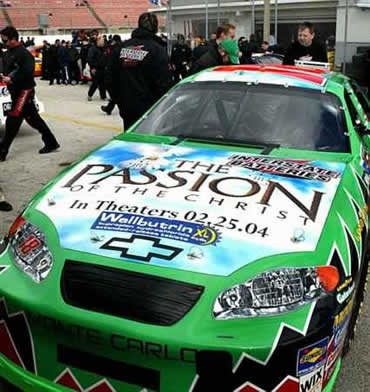
** Full disclosure: I haven't actually seen The Passion of the Christ (but I have seen "The Christ Nail" episode of Curb Your Enthusiasm a couple of times as well as the NASCAR product placement). Personally I can't justify spending two-and-a-half hours watching a guy from Skagit County, WA, getting whipped. Unless it was Glenn Beck.
April 27, 2008
How do you make a hormone*
Neil Noeson is an alleged pharmacist that refused to fill a prescription for oral contraceptives in a K-Mart at Menomonie, WI, in 2002.
Noesen additionally refused to tell the patient where she could get her prescription filled. When the patient went and found a Menomonie Wal-Mart, Noesen even refused to provide the information that would have allowed the latter's druggist to fill the prescription. By the time the patient was able to fill her prescription two days later, she had missed the first prescribed dose.
All because Neil Noeson is a self-righteous, self-appointed religious crusader, a "conscientious objector" contra contraception. Of course the initial mistake was committed by the patient, whom Noeson asked for what purpose the medication was prescribed, because it has physiological uses other than preventing pregnancy. Rather than answering the pharmacist honestly, as she did, she should have told him to mind his own goddamn business and just do his job.
In so many words, of course.
The patient justly filed a complaint with the appropriate State executive agency and Noesen was properly reprimanded and disciplined. Noesen appealed the ruling of the adminstrative tribunal, and was unequivocally smacked down once more late last month by the District III Court of Appeals in Noesen v. Wisconsin Dept. of Regulation and Licensing (.pdf, 16 pgs.).
Wrote the court:
* Don't pay her.
UPDATE: Talkin' Neil Noeson Birth Control Pill Blues — J-S Online
Noesen additionally refused to tell the patient where she could get her prescription filled. When the patient went and found a Menomonie Wal-Mart, Noesen even refused to provide the information that would have allowed the latter's druggist to fill the prescription. By the time the patient was able to fill her prescription two days later, she had missed the first prescribed dose.
All because Neil Noeson is a self-righteous, self-appointed religious crusader, a "conscientious objector" contra contraception. Of course the initial mistake was committed by the patient, whom Noeson asked for what purpose the medication was prescribed, because it has physiological uses other than preventing pregnancy. Rather than answering the pharmacist honestly, as she did, she should have told him to mind his own goddamn business and just do his job.
In so many words, of course.
The patient justly filed a complaint with the appropriate State executive agency and Noesen was properly reprimanded and disciplined. Noesen appealed the ruling of the adminstrative tribunal, and was unequivocally smacked down once more late last month by the District III Court of Appeals in Noesen v. Wisconsin Dept. of Regulation and Licensing (.pdf, 16 pgs.).
Wrote the court:
In short, Noesen abandoned even the steps necessary to perform in a “minimally competent” manner under any standard of care. He prevented all efforts [the patient] made to obtain her medication elsewhere when he refused to complete the transfer and gave her no options for obtaining her legally prescribed medication elsewhere. The [licensing] Board could therefore properly conclude he violated a standard of care applicable to pharmacists: it does not matter which standard, because Noesen’s behavior “substantially departs” from all of them [lol!].Last week Noeson appealed again, to the Wisconsin Supreme Court. This will be a good test case for Mike Gableman to apply his famously vacuous "fair reading of the plain language of the law" mantra or else perhaps he'll be able to miraculously divine a constitutional right for Neil Noesen to have deliberately and intentionally interfered with the health and safety of the woman in question on "religious" grounds.
* Don't pay her.
UPDATE: Talkin' Neil Noeson Birth Control Pill Blues — J-S Online
"I'm part of the problem," he said.I bet he's a real effective contraceptive at parties.
Worst of the local rags
The Milwaukee Journal-Sentinel runs a feature every weekend called the Best of the Wisconsin Blogs. It's in the hard copy paper too. This week the Best of the Blogs is represented by an incoherent two-paragraph diatribe inspired by the "genius" of Rush Limbaugh, some nonsense about "the Hildabeast" and "Shrillary" and Republicans disingenuously masquerading as registered Democrats.
High calibre stuff, clearly. And so original.
J-S editorial board member Patrick McIlheran, a chooser of the "Best" blogs, once actually compared the substanceless rant's author to H.L. Mencken, one of the finest writers in the American language ever.
Its inclusion is practically an insult. But fortunately most of us don't have to depend on the J-S to tell us who's doing the best writing out here and are likely even pleased not to be included with the allegedly representative samples. Mencken himself would be as pleased.
High calibre stuff, clearly. And so original.
J-S editorial board member Patrick McIlheran, a chooser of the "Best" blogs, once actually compared the substanceless rant's author to H.L. Mencken, one of the finest writers in the American language ever.
Its inclusion is practically an insult. But fortunately most of us don't have to depend on the J-S to tell us who's doing the best writing out here and are likely even pleased not to be included with the allegedly representative samples. Mencken himself would be as pleased.
April 26, 2008
Blogger Cavett moderates comments
Petraeus, Custer and You.
At least one of your readers last week suggested that General Petraeus had no choice in wearing the uniform with all that fruit-salad on it. Bull. If he can order the deaths of thousands, he can wear a tee-shirt and shorts to a congressional hearing.Last week.— richard k
Atheist sues foxhole

It eventually came out in Iraq in 2007, when he was in a firefight. Hall was a gunner on a Humvee, which took several bullets in its protective shield. Afterward, his commander asked whether he believed in God.Atheist = immoral Devil worshipper — CNN.com
"No, but I believe in Plexiglas."
A is for poisoned Appling
This is old news, but I just came across it at Wisconsin Public Television's WisconsinVote.org, which appears to be on hiatus. There is a March 31 link to something called the "State of America's Families blog," and you know you have to check it out because all of them there outfits with "Family" in the name are the real beacons of God's Own Truth and Honesty in America today.
The link gets you to some sort of press release by a gibbering nutcake called Julaine Appling, "president of Wisconsin Family Action." (These "families" are self-referentially incestuous.)
And what you will find is horrifying:
And yes, I know it's damn near unpossible for the "family" units to believe, but somebody actually spoke in support of equality — in America! I can almost hear Jefferson rotating in his grave.
It's getting like Iran around here these days, I tell ya.
Constructive perverts like Julaine Appling and her neurotically prurient ilk spend too much time fixated on the mechanical details of sexual coupling and not enough addressing the larger questions of gender. They're like people who hate porn so much they have to watch it over and over again to make sure it really does offend them.
Does Julaine Appling think, for example, that persons born with ambiguous genitalia "chose that lifestyle"? Not only is sexuality defined with considerable fluidity throughout humanity, so too is our very gender: female, male, and not so clear-cut.
It's little different from what people call "race," which is really only a set of physical distinctions evolved over several hundred thousand years and exactly what you'd expect to find in individual populations within any species. Even the creationists have a word for it: "microevolution." And there's no arguing with them.
In other words, because my parents weren't descended from any of the populations that emigrated eastward across Asia 70,000 years ago, I couldn't choose to look like Akira Kurosawa. Or Miles Davis.
By a similar token, just because somebody's not a raging stud heterosexual in full speed-rut like the "reverend" Ted Haggard doesn't make them exempt from fundamental U.S. freedoms.
"I think we've been extremely tolerant in allowing them to live wherever they choose," Julaine Appling has been reported as saying about gay people. Well that's mighty white of you, Ms. Appling (if that really is your real gender).
The link gets you to some sort of press release by a gibbering nutcake called Julaine Appling, "president of Wisconsin Family Action." (These "families" are self-referentially incestuous.)
And what you will find is horrifying:
Fair Wisconsin has good reason to believe that Butler will side against traditional marriage as Butler spoke at the Wisconsin LGBT PAC Garden Party in August of 2007. This group subsequently endorsed Butler, noting on its web site that he “spoke in support of LGBT equality.”First of all I don't quite get how you can accuse somebody of siding against traditional marriage who has been married for 25 years and has grandchildren as opposed to another that's been a lifelong bachelor for going on four-and-a-half decades.
And yes, I know it's damn near unpossible for the "family" units to believe, but somebody actually spoke in support of equality — in America! I can almost hear Jefferson rotating in his grave.
It's getting like Iran around here these days, I tell ya.
Constructive perverts like Julaine Appling and her neurotically prurient ilk spend too much time fixated on the mechanical details of sexual coupling and not enough addressing the larger questions of gender. They're like people who hate porn so much they have to watch it over and over again to make sure it really does offend them.
Does Julaine Appling think, for example, that persons born with ambiguous genitalia "chose that lifestyle"? Not only is sexuality defined with considerable fluidity throughout humanity, so too is our very gender: female, male, and not so clear-cut.
It's little different from what people call "race," which is really only a set of physical distinctions evolved over several hundred thousand years and exactly what you'd expect to find in individual populations within any species. Even the creationists have a word for it: "microevolution." And there's no arguing with them.
In other words, because my parents weren't descended from any of the populations that emigrated eastward across Asia 70,000 years ago, I couldn't choose to look like Akira Kurosawa. Or Miles Davis.
By a similar token, just because somebody's not a raging stud heterosexual in full speed-rut like the "reverend" Ted Haggard doesn't make them exempt from fundamental U.S. freedoms.
"I think we've been extremely tolerant in allowing them to live wherever they choose," Julaine Appling has been reported as saying about gay people. Well that's mighty white of you, Ms. Appling (if that really is your real gender).
April 25, 2008
ACLU sides with creationists 60% of the time
Scientific American's editor-in-chief interviews Mark Mathis, the jackanapes in charge of judger of top models Ben Stein's latest rickety "intelligent design" (translation: creationism in a cheap tuxedo) vehicle, Expelled.
I'm not in the mood to wallow in creationist idiocy at the moment, especially with the Schubert string quintet occupying the sound system; maybe later. In the meantime, the footnote at the SCIAM webpage is good for a laugh.
Demonstrating yet again how creationists never weary of regurgitating the same old viscous and thoroughly debunked drivel, Mathis mumbles that Kitzmiller v. Dover Area Sch. Dist., the currently definitive Establishment of Religion Clause manhandling* of intelligent design "theory," is comprised of 92% ACLU memoranda, briefs, and "findings of facts," as we say.
Even if it were true — which it isn't — it's not much of a criticism but rather a tribute to the ACLU's stellar efforts. What in the hell does Mathis think plaintiffs file facts and arguments with the court for? So the judge can paper his archaeopteryxcage with them?
Mathis. Just admit it, you're peddling religion. Which is fine. Peddle and lie away. It's a free country. But we would like to keep at least one area of human enquiry and endeavor free from your hobgoblins and leprechauns, and that is science. You can have everything else.
Now go ye and get a real job.
* The fine product of a conservative Republican, Dubya-installed judge named John E. Jones, III, which memorably added "breathtaking inanity" to the lexicon of perfect descriptions both for creationists and their -ism, and contains the strong suggestion that several Bible-fearing creationist witnesses at trial, er, bore false witness under oath.
I'm not in the mood to wallow in creationist idiocy at the moment, especially with the Schubert string quintet occupying the sound system; maybe later. In the meantime, the footnote at the SCIAM webpage is good for a laugh.
Demonstrating yet again how creationists never weary of regurgitating the same old viscous and thoroughly debunked drivel, Mathis mumbles that Kitzmiller v. Dover Area Sch. Dist., the currently definitive Establishment of Religion Clause manhandling* of intelligent design "theory," is comprised of 92% ACLU memoranda, briefs, and "findings of facts," as we say.
Even if it were true — which it isn't — it's not much of a criticism but rather a tribute to the ACLU's stellar efforts. What in the hell does Mathis think plaintiffs file facts and arguments with the court for? So the judge can paper his archaeopteryxcage with them?
Mathis. Just admit it, you're peddling religion. Which is fine. Peddle and lie away. It's a free country. But we would like to keep at least one area of human enquiry and endeavor free from your hobgoblins and leprechauns, and that is science. You can have everything else.
Now go ye and get a real job.
* The fine product of a conservative Republican, Dubya-installed judge named John E. Jones, III, which memorably added "breathtaking inanity" to the lexicon of perfect descriptions both for creationists and their -ism, and contains the strong suggestion that several Bible-fearing creationist witnesses at trial, er, bore false witness under oath.
Patron saint of shitty looking Nativity scenes*
[* Batteries not included — animals not to scale — void in U.S.]

Win a ten dollar Mexican food gift certificate (or cash).
Alas pore Fradette, I knew him, Horatio.

Win a ten dollar Mexican food gift certificate (or cash).
Alas pore Fradette, I knew him, Horatio.
A measly 15 DIWITTYs
 Back in 2005, I used to talk to Renato Umali quite a bit. I was working at a music store where Renato teaches piano so I was seeing him three or four days a week, I guess, and talked to him on the phone when he had to make some adjustment to his schedule or whatever. I don't remember exactly.
It's not that I don't remember exactly because Renato isn't an interesting guy and a heck of a personable and funny one at that. Aside from being a pretty decent pianist and from all accounts a beloved music teacher, he's a knowledgeable cinéaste who teaches a few courses in film at the University of Wisconsin-Milwaukee, is engaged to a lawyer, is an avid cyclist and a rabid hockey fan, is a nationally-ranked Scrabble player, and is fairly well known in the community for his activities as a conceptual artist.
Of Renato's February 8 performance at the Bremen Café in Riverwest, learned counsel, talented singer/songwriter, and independent recording artist Mike Plaisted had this to say:
Renato did one of the most amazing things I ever saw — singing a book about British colonialism in India, in character with the English guy. Incredible.Besides, you don't have to remember when or how often you talk to Renato because he keeps track of all of that, since he's also a remarkably fastidious diarist. So that's how I know I talked to Renato on 86 separate occasions in 2005. He could give you the dates and the exact times.
In fact it was so many times I actually won an award for it, an Umali Award commemorating my 86 DIWITTYs, which means, "day in which I talk to you." Eighty-six DIWITTYs put me in fourth place for 2005, if I recall correctly, and the award was presented at an elaborate ceremony at a very cool Riverwest loft attended by a formally dressed cast of hundreds.
I even got to make an acceptance speech, so I could express how honored and humbled I was to help facilitate Renato's obsessive-compulsive disorder, or something like that. Whatever it was it got a big laugh. I still see Renato fairly often but I haven't attended an Umali Awards since then. Until tomorrow night, which is when Renato celebrates the seventh annual Umali Awards and I get to present one this time.
Except the Umali Awards aren't in Riverwest anymore, as Renato has eschewed the trappings of his Bohemian roots and moved Uptown to the UWM Peck School of the Arts' posh and high-tech INOVA/Kenilworth Square (because, Renato claims, it's closer to Izumi Japanese restaurant on Prospect Ave.).
And, as depicted above, for the Umali Awards trophies themselves, Renato has upgraded from hand printed certificates to fancy golden statuettes. Next year Joan Rivers will be outside on a red carpet. In other words, Renato has SOLD OUT. Just kidding. Tomorrow's big night is guaranteed to be the most elaborate and successful yet.
DIWITTYs aren't the only thing Renato keeps track of; he also logs practically each minutiae of his daily life, including the details of each meal he takes, and then he even plots the results on spreadsheets which he analyzes and draws global inferences from and determines wider trends. For example, this year's snazzy full color seventh annual Umali Awards lobby card bears a bar chart/graph comparing y axis = eggs with x axis = known vegans.
I have no idea what that means, or if that includes both full bore vegans and lacto-ovo vegans, or even if there is such a thing as a lacto-ovo vegan, but it looks to me like the eggs are beating the vegans for a change. Some of this year's Umali Awards categories are similarly cryptic: "Come root for Anna Oxygen, Egg Fried With Rice, New Glarus's Spotted Cow, Classic Slice, February 12 2007, and a whole bunch of other nominees!" it says here.
I've been reviewing my speech, which Renato has written, and is almost like a television script because the prefatory remarks are accompanied by a tightly coordinated PowerPoint/video presentation. Actually it looks like I'm presenting three Umali Awards, for the tenth, ninth, and eighth place 2007 DIWITTYs. And I notice I'm also being forced to admit to the ignominy of following my 86-DIWITTY triumph of 2005 with a woeful 15 in 2006.
Oh well. I guess it was one of those records that will never be equaled, like Chicago Blackhawk Bill Mosienko's three goals in 21 seconds against the Rangers on March 23, 1952. I can't say what Bill Mosienko had to eat that day, but I wouldn't be surprised if Renato can. And he probably has a chart comparing Bill Mosienko hat tricks with the incidence of lacto-ovo vegans. If he doesn't I bet you he thinks that would be a good idea.
And so once again I'm honored and humbled to be involved with the Umali Awards, especially in what promises to be the fanciest, conceptualiest see-and-be-seen-at gala event of the social season. See you there.
Blasphemy Nation
Mike Mathias has a good one here:
Life of Edward
And check this guy out:
Conservative State politician enjoys the R&B stations when he's not out commemorating Hitler's birthday — in front of a portrait of Hitler
Haha. Only in Upper Silesia (pre-1918 boundaries).
eta: Mathias caught a comment from a real-live American Nazi.
Life of Edward
And check this guy out:
Conservative State politician enjoys the R&B stations when he's not out commemorating Hitler's birthday — in front of a portrait of Hitler
Haha. Only in Upper Silesia (pre-1918 boundaries).
eta: Mathias caught a comment from a real-live American Nazi.
Taliban inadvertently does something worthwhile
Although caves decorated with precious murals from 5th to 9th century A.D. also suffered from Taliban attacks on this World Heritage Site, they have since become the focus of a major discovery, revealing Buddhist oil paintings that predate those in Renaissance Europe by hundreds of years.One of my favorite blogs as lovingly prepared by one of my favorite people has the further scoop over yonder:
The first oil paintings were made in Asia, not Europe
X-posting: Poor netiquette?
Eh, who the hell cares.Republicrat, I wasn't being sarcastic. And the primary strawman was that I think I know better than the general public (for lack of a better term).
I don't believe for a minute that I know better. The general public is at least as capable as I am of knowing the score.
I learned it, and there's absolutely no reason why anybody else couldn't (especially if I can).
But unfortunately the loudest speakers in this particular election were clowns and liars (jokers to the right), and that goes for all of the 3rd party advertising — although even Butler's 3rd party supporters were several orders of magnitude more honest than Gableman's. Or, the worst of the worst, Gableman's own.
I've never even implied that I think I know better than the general public, only that the general public may not follow these things as closely as some of us do.
And the some of us who do that followed this one especially closely found it pretty easy to separate the bereshite from the bullsh*t (pardon the uncharacteristically timid asterisk; I heard this was a family blog).
But hardly anybody was listening to us, or else they would have listened if they even knew we existed. We don't have 50k watts and the public airwaves [insert Fairness Doctrine joke here] over which to howl like a stuck primate every morning.
That's all I'm sayin'.
How strong is your assertion on Sam Sarver's blog? How incompetent must a "liberal" be for you to vote for a meritorious "conservative"?
I mean it. As for the hypothetical, let's just say that if the roles were reversed, I'd have had a Gableman sign on my lawn. H*ll, I'd have sewn a Gableman patch on my suit jacket, like the WMC one he has on his robe.
And the reason I said I'd changed my mind about electing vs. appointing Supreme Court judges is not because I don't think the voters can handle it. It's because the nominee couldn't handle it.
He has a responsibility — indeed, an obligation — to at least treat the office he seeks with respect. And he failed on that account. Miserably.
So it's no fault of the general public. It's the fault of people who want to abuse the court's function because they have enough money to do it and they need to protect that investment so they're more than willing to say anything in service of that money.
[Seriously, have you ever heard anyone refer to the United States Constitution as a "needless technicality" — in fact, the very provision that none other than Justice Antonin Scalia was vigorously defending the other day (on precisely the same grounds as Justice Louis Butler)?]
And putting a stop to that is worth the price of removing the selection process from the relatively small number of people who bother to exercise it anyway. I'm only talking about the Supreme Court, incidentally.
A competent Supreme Court comprised of our best legal minds is surely the least we can expect for this great State. We have an abundance of those minds here, and we shouldn't settle for less.
An appointment process can at least ensure that only the most talented are considered to begin with and the general public can continue to participate in whatever "liberal" vs. "conservative" controversy erupts then. But the debate will necessarily be of a higher quality. Anything would be of better quality than the recent unpleasantness.
Surely the general public would appreciate a more heightened debate as opposed to getting taken for and treated as suckers by third-party special interest groups, most of whom do not have the public's own special interests at heart whatsoever.
Whom did you vote for in the Sykes-Butler campaign?
Dude I didn't even know who either of them were until about six years later.
And I wouldn't tell you who I voted for anyway. You're not supposed to do that, are you? It's a sacred trust. But the statute of limitations has run on at least one of my secret ballots, and I can now reveal that I voted for Sheila Copps in 1986.
I think that was the year Brian Mulroney's Conservatives (yes, that's actually the name of the party — there's no "Democrat," "Republican" euphemisms up there) went from 275 seats in the House of Commons to three. Know what that was? Reagan fatigue. It penetrated even the icy fjords of Bay and King Sts. Those were the days my friend.
April 24, 2008
CNN bests Illy-T in headline derby
I thought I had a hit with "Mormon sex farm," but I hereby doff my quasi-editorial cap to "Polygamy ranch kids." Selah.


Patrick McIlheran's Supreme arrogance
A couple of days before the April 1 State election, Patrick McIlheran of the Milwaukee Journal-Sentinel printed an exceptionally silly — even for him — bit of absurdist fluff mocking Wisconsin Supreme Court Justice Louis Butler for a comparison that had arisen between Butler and U.S. Supreme Court Justice Antonin Scalia.
In a textbook demonstration of Proverbs 16:18, McIlheran wrote that one need only be "minimally sentient" to understand that the comparison is "towering nonsense."
The ironic truth is that McIlheran's manifestly supercilious pronouncement applies perfectly to his own ill-informed scribblings.
As I pointed out to McIlheran at the time,
That Giles presents the identical constitutional question Justice Butler had addressed in his lone dissent in Jensen:
McIlheran declined the wager, perhaps realizing that his March 28 blog post was nearly as foolish as his earlier celebrated uncritical acceptance of this laughable characterization of Jensen:
During the oral presentations, Justice Scalia takes pains to distinguish an exception to a hearsay rule of evidence known as the "dying declaration" from the requirements of the Confrontation Clause, which he calls "a totally different situation," precisely as Justice Butler had done. Throughout the oral arguments, in classic Scalia fashion, Scalia helps along the lawyer arguing for the defendant, Giles, and gives the attorney representing the State of California an extremely hard time ("siding with criminals"?).
Even Patrick McIlheran should be able to see this, since he claims to have been "minimally sentient during some portion of Scalia's years on the bench." I beg to differ, but I'll give him the benefit of the doubt in this case. Of course McIlheran himself may be "minimally sentient," but the said minimal sentience has little to do with understanding comparative jurisprudence generally or in particular the close parallels between Justice Butler and Justice Scalia's reasoning pursuant to the meaning of the Confrontation Clause.
McIlheran's fatuous yet arrogant commentary is a perfect example of the mis- and disinformation spread by a number of undeservedly prominent and irresponsible Wisconsin media chumps and other alleged "journalists" during the State Supreme Court election campaign — not to mention by Mike Gableman and his direct handlers and enablers themselves — and we have them all to thank for that "stellar example of democracy in action" whereby roughly 9.6% of the State's registered voters rid the other 90.4% of one of the smartest appellate court judges in the country. As smart as the beatified (and not in the Jack Kerouac sense) Antonin Scalia, it would appear.
And they're actually "proud" of it, evidently in the Proverbial sense.
eta: It looks as though April 24, 2008, is Let Us Now Celebrate the Wisdom of Patrick McIlheran Day in the Wisconsin blogosphere:
Taking Pro-Life to the X-Treem
Patrick McIlheran loves DDT
McIlheran v. People of Earth
And even a wistfully touching defense:
We can't all be Nino [Scalia]
McIlheran interviewed a hand-selected conservative GOP hackette named Kellyanne Conway? Oh well, then; I take it all back. :rolleyes:
In a textbook demonstration of Proverbs 16:18, McIlheran wrote that one need only be "minimally sentient" to understand that the comparison is "towering nonsense."
The ironic truth is that McIlheran's manifestly supercilious pronouncement applies perfectly to his own ill-informed scribblings.
As I pointed out to McIlheran at the time,
Butler's approach in [State v.] Jensen is very similar to that of the most conservative members of the U.S. Supreme Court. It's a near-classic example of a very narrow reading of the text supported by an analysis of the original intent behind the Confrontation Clause.I directed McIlheran to my own discussions of State v. Jensen posted here and then offered to bet McIlheran that Justice Scalia would adopt precisely the same approach in Giles as had Justice Butler in Jensen.
In fact, that is one of the reasons why SCOTUS will very likely rule for the defendant/appellant in Giles v. California, a case that presents the identical question of constitutional construction that Butler addresses in his Jensen dissent.
That Giles presents the identical constitutional question Justice Butler had addressed in his lone dissent in Jensen:
Does a criminal defendant “forfeit” his or her Sixth Amendment Confrontation Clause claims upon a mere showing that the defendant has caused the unavailability of a witness, as some courts have held, or must there also be an additional showing that the defendant’s actions were undertaken for the purpose of preventing the witness from testifying, as other courts have held?The Jensen of Jensen, it may be recalled, is Mark Jensen, who was convicted of first-degree intentional homicide for the murder of his wife, whom he poisoned with antifreeze.
McIlheran declined the wager, perhaps realizing that his March 28 blog post was nearly as foolish as his earlier celebrated uncritical acceptance of this laughable characterization of Jensen:
[Justice Butler] wanted looser standard than other justices on allowing hearsay; standard preferred by Jensen's attorneyOn Tuesday, the U.S. Supreme Court heard oral arguments in Giles v. California. As Lyle Denniston at SCOTUSblog — who has forgotten more about the law than Patrick McIlheran and the demonstrable liar who wrote the ungrammatical nonsense indented directly above will ever know put together — reports,
Justice Antonin Scalia was the most fervent champion of Giles’ cause, suggesting that the Court in [an earlier SCOTUS decision] had interpreted “the meaning of the Confrontation Clause” as it was understood “when the people adopted it.”And the meaning of the Confrontation Clause "when the people adopted it" is exactly at the core of Justice Butler's reasoning in State v. Jensen. The complete transcript of the SCOTUS oral arguments is archived here (.pdf; 60 pgs.).
During the oral presentations, Justice Scalia takes pains to distinguish an exception to a hearsay rule of evidence known as the "dying declaration" from the requirements of the Confrontation Clause, which he calls "a totally different situation," precisely as Justice Butler had done. Throughout the oral arguments, in classic Scalia fashion, Scalia helps along the lawyer arguing for the defendant, Giles, and gives the attorney representing the State of California an extremely hard time ("siding with criminals"?).
Even Patrick McIlheran should be able to see this, since he claims to have been "minimally sentient during some portion of Scalia's years on the bench." I beg to differ, but I'll give him the benefit of the doubt in this case. Of course McIlheran himself may be "minimally sentient," but the said minimal sentience has little to do with understanding comparative jurisprudence generally or in particular the close parallels between Justice Butler and Justice Scalia's reasoning pursuant to the meaning of the Confrontation Clause.
McIlheran's fatuous yet arrogant commentary is a perfect example of the mis- and disinformation spread by a number of undeservedly prominent and irresponsible Wisconsin media chumps and other alleged "journalists" during the State Supreme Court election campaign — not to mention by Mike Gableman and his direct handlers and enablers themselves — and we have them all to thank for that "stellar example of democracy in action" whereby roughly 9.6% of the State's registered voters rid the other 90.4% of one of the smartest appellate court judges in the country. As smart as the beatified (and not in the Jack Kerouac sense) Antonin Scalia, it would appear.
And they're actually "proud" of it, evidently in the Proverbial sense.
eta: It looks as though April 24, 2008, is Let Us Now Celebrate the Wisdom of Patrick McIlheran Day in the Wisconsin blogosphere:
Taking Pro-Life to the X-Treem
Patrick McIlheran loves DDT
McIlheran v. People of Earth
And even a wistfully touching defense:
We can't all be Nino [Scalia]
McIlheran interviewed a hand-selected conservative GOP hackette named Kellyanne Conway? Oh well, then; I take it all back. :rolleyes:
April 23, 2008
Reductio ad Hitlerum
Godwin's Law is a rule of the internets which states that during online debates, the earlier a participant brings up Adolf Hitler or Nazi Germany, the less likely fruitful arguments will then obtain.
Godwin's Law has disastrous real life consequences as well, as indicated by the shooting to death of a Milwaukee man in federal prison "during a melee that erupted when a white-supremacist prison gang taunted African-American prisoners on Adolf Hitler's birthday."
"[Colorado State Rep. Buffie] McFadyen said there needs to be an analysis of what caused the riot." I can save her the expense of at least one legislative subcommittee and tell her right now: Stupidity and ignorance, evidently regular features of the human condition.
Now all that remains is for judger of top models Ben Stein and his buffoonish "intelligent design" supporters to tell us that the white supremacists had just come from their prison book club, where they were discussing Charles Darwin's On the Origin Of Species.
They might also explain why white supremacists are apparently exempt from the theoretical bases for "intelligent design."
Godwin's Law has disastrous real life consequences as well, as indicated by the shooting to death of a Milwaukee man in federal prison "during a melee that erupted when a white-supremacist prison gang taunted African-American prisoners on Adolf Hitler's birthday."
"[Colorado State Rep. Buffie] McFadyen said there needs to be an analysis of what caused the riot." I can save her the expense of at least one legislative subcommittee and tell her right now: Stupidity and ignorance, evidently regular features of the human condition.
Now all that remains is for judger of top models Ben Stein and his buffoonish "intelligent design" supporters to tell us that the white supremacists had just come from their prison book club, where they were discussing Charles Darwin's On the Origin Of Species.
They might also explain why white supremacists are apparently exempt from the theoretical bases for "intelligent design."
April 22, 2008
And I thought I was cynical
But I got nothing on these characters. WisOpinion.com doesn't like me anymore, but they sure link to some ridiculous junk commentary in the meantime. Here's another dazzling gem from the geniuses at the Republican "think tank," the Wisconsin Policy Research Institute:
Nobody "set it up," although plenty of other conservative Republicans will tell you that God did, and not lawyers, whom God dislikes.
Apparently our profoundly cynical masters at the WPRI and Wisconsin Manufacturers & Commerce don't see things quite the way the Framers did. The latter thinks the U.S. Constitution is a "needless technicality" and now the former claims both "benefit only lawyers."
While they may harbor a deep and abiding respect for their corporate self-interests, they obviously have little for their country's or their State's foundational premises and documents.
That takes a Canadian, evidently.
Judges are part of an industry, the legal industry. It is set up by lawyers, for lawyers, and to benefit only lawyers.That's intriguing, because I read this somewhere:
The judicial Power of the United States, shall be vested in one supreme Court, and in such inferior Courts as the Congress may from time to time ordain and establish.And I recall this uncannily similar provision:
The judicial power of this state shall be vested in a unified court system consisting of one supreme court, a court of appeals, a circuit court, such trial courts of general uniform statewide jurisdiction as the legislature may create by law, and a municipal court if authorized by the legislature.Now I'm sure many of the Framers of both the United States and Wisconsin constitutions were lawyers, but not all of them. Nor do constitutions protect only lawyers. Mark well also that in each document, the judicial power is assumed to be preexisting.
Nobody "set it up," although plenty of other conservative Republicans will tell you that God did, and not lawyers, whom God dislikes.
Apparently our profoundly cynical masters at the WPRI and Wisconsin Manufacturers & Commerce don't see things quite the way the Framers did. The latter thinks the U.S. Constitution is a "needless technicality" and now the former claims both "benefit only lawyers."
While they may harbor a deep and abiding respect for their corporate self-interests, they obviously have little for their country's or their State's foundational premises and documents.
That takes a Canadian, evidently.
"Our" Lord? Oy, vey iz mir.
 Last Tuesday, the sheriff of Burnett County, Dean Roland, issued a letter on government stationery trumpeting a two-hour prayer breakfast at a restaurant in the county seat, Siren, on May 1. The featured speaker is none other than Mike Gableman. Sheriff Roland writes:
Judge Gableman is a man who is deeply committed to our Lord, his religion and his profession.Excuse me? Assuming Sheriff Roland is referring to Jesus Christ (or Allah, for that matter), that is not "our Lord," nor especially is Jesus Christ the "Lord" of Burnett, Milwaukee, or even Ashland County.
He's certainly not my "Lord," and I don't believe he's the Lord of any of my Jewish friends either. Why in the Sam Hill would Sheriff Roland use official government stationery to declare such a thing?
None too bright, that's for sure. Needless to say, Madison's Freedom From Religion Foundation has lodged a complaint. I'm not sure I'd go so far as the FFRF's wholesale condemnation of the prayer breakfast, but it's hardly appropriate — to say the least — for the expression "our Lord" to appear on official government stationery.
April 21, 2008
Quality not quantity measures blog readership

Justice Scalia must be in the market for a new law clerk but I don't have the heart to tell him he probably can't afford me.
Our corporate activist protectors
A welcome addition to the ranks of Milwaukee blogulators has sprung up here, in the persona of Super Id (Favorite Books: Atlas Shrugged and The Grapes of Wrath ... very clever and endearingly ambiguous).
A recent Super Id post observes that — hang on to your René Magritte bowler hats — the conservative "think tank" Wisconsin Policy Research Institute completely misrepresented a decision of the State Supreme Court. Shocking, I know.
Some character called Deb Jordahl, writes Super Id, "is extremely mistaken in her facts" in assessing a recent decision of the court, Stuart v. Weisflog.
For Super Id, "judicial activism" better describes Justice Roggensack's proposed course of action, which is to supplant duly enacted legislation with judge-made rules. Compare that more definitively empirical approach with Marquette Law professor Rick Esenberg's recent shining example of "judicial activism."
Last week in a case called Baze v. Rees, the United States Supreme Court upheld the constitutionality of the three-drug procedure that several States use to commit premeditated, intentional homicide on selected American citizens.
Justice John Paul Stevens, concurring in the majority's decision to affirm the the lethal injection protocol, wrote separately to discuss the controversial future of the practice among the States and citing the conservative former Justice Byron White's own personal observations on the death penalty itself.
Prof. Esenberg calls this "judicial activism," even though Justice Stevens joined in the judgment of the Court to continue the practice of capital punishment.
Talk about grasping for straws and strawmen. Perhaps Esenberg was inspired by Justice Antonin Scalia's own concurring opinion, written expressly to criticize Justice White's view (via Justice Stevens) that capital punishment, as a general matter of penology, makes but "marginal contributions to any discernible social or public purposes."
Scalia doesn't care for this observation because he thinks social or public purposes are better discerned by the legislatures of the States. Ultimately, Scalia's objection is based in a differing interpretation of the Constitution's Eighth Amendment, which bans the infliction of cruel and unusual punishments. Scalia, like Prof. Esenberg, never mentions that Stevens joined the judgment of the Court, in holding that the three-drug protocol passes Eighth Amendment muster.
And Scalia has never relied on his own personal views in a Supreme Court opinion? Give me a large break and supersize it.
Scalia at least allows that the death penalty's value is "eminently debatable and the subject of deeply, indeed passionately held, views." He just doesn't like Justice Stevens expressing them or, at least, echoing those of Justice White. And this is "judicial activism," according to Prof. Esenberg, despite Stevens joining the six other Justices who voted to affirm the practice of lethal injection as currently practiced. Anything to slam a so-called "liberal judge," apparently, no matter how tenuous to the point of non-existence.
Meanwhile, closer to home, yet more absurdity proceeds from the disingenuous observations of another conservative "think tank" genius, this time hailing from Chicago's Heartland Institute, in the person of one Maureen Martin and a bit of partisan gibberish published the other day in the Wisconsin State Journal.
Referring to the recent State Supreme Court election as "a stellar example of democracy in action" and proof positive "that Wisconsinites care about judicial rulings," Martin goes on to wail predictably and tediously about "liberal elitists."
What Martin doesn't tell you is that only 19% of registered voters cared to participate in this stellar example of democracy and, more importantly, the rulings Wisconsinites supposedly do care about were portrayed by Mike Gableman and his enablers and supporters almost entirely by lying about them.
I wonder who's paying Maureen Martin to fabricate this transparently partisan rubbish, and why the Wisconsin State Journal is publishing it (Chicago, if I'm not mistaken, is in Illinois). Those are not unreasonable questions, because the Heartland Institute is in the business of, for example, denying the health effects of second-hand smoke on behalf of generous stipends gotten from Philip Morris USA, Inc. and lobbying for the oil industry thanks to nearly a million Exxon dollars received over the last ten years.
Of course that's not reflective of "elitism" at all, that's jes' plain folks conservative Republican grass roots populism. Salt of the earth.
How singularly unsurprising that another paid corporate shill would support the empty-suit candidacy of Mike Gableman. Corporate shills were Mike Gableman's biggest supporters throughout the campaign and corporate shills were largely responsible for lying to Wisconsin voters about sitting Justice Louis Butler's record, going so far even to refer to the U.S. Constitution as a "needless technicality."
But, yeah, a stellar example of democracy in action. Right.
A recent Super Id post observes that — hang on to your René Magritte bowler hats — the conservative "think tank" Wisconsin Policy Research Institute completely misrepresented a decision of the State Supreme Court. Shocking, I know.
Some character called Deb Jordahl, writes Super Id, "is extremely mistaken in her facts" in assessing a recent decision of the court, Stuart v. Weisflog.
More troubling is her citation to Justice Roggensack's dissent, which would have effectively invalidated the legislature's home improvement practice act by applying the judicially created created economic loss doctrine. That's the real judicial activism in Stuart.The puppet in question being, of course, Mike Gableman who, while squeaking out a 51-49 electoral win among a whopping 19% of Wisconsin's registered voters, nevertheless managed to lose his home field, Ashland County, and he toils yet until through the end of July, "presiding over" thousands of uncontested traffic tickets.
But when your mission is to hack apart a competent judge, the facts do not even matter. Congrats WMC, you won your puppet, now can you live with him?
For Super Id, "judicial activism" better describes Justice Roggensack's proposed course of action, which is to supplant duly enacted legislation with judge-made rules. Compare that more definitively empirical approach with Marquette Law professor Rick Esenberg's recent shining example of "judicial activism."
Last week in a case called Baze v. Rees, the United States Supreme Court upheld the constitutionality of the three-drug procedure that several States use to commit premeditated, intentional homicide on selected American citizens.
Justice John Paul Stevens, concurring in the majority's decision to affirm the the lethal injection protocol, wrote separately to discuss the controversial future of the practice among the States and citing the conservative former Justice Byron White's own personal observations on the death penalty itself.
Prof. Esenberg calls this "judicial activism," even though Justice Stevens joined in the judgment of the Court to continue the practice of capital punishment.
Talk about grasping for straws and strawmen. Perhaps Esenberg was inspired by Justice Antonin Scalia's own concurring opinion, written expressly to criticize Justice White's view (via Justice Stevens) that capital punishment, as a general matter of penology, makes but "marginal contributions to any discernible social or public purposes."
Scalia doesn't care for this observation because he thinks social or public purposes are better discerned by the legislatures of the States. Ultimately, Scalia's objection is based in a differing interpretation of the Constitution's Eighth Amendment, which bans the infliction of cruel and unusual punishments. Scalia, like Prof. Esenberg, never mentions that Stevens joined the judgment of the Court, in holding that the three-drug protocol passes Eighth Amendment muster.
And Scalia has never relied on his own personal views in a Supreme Court opinion? Give me a large break and supersize it.
Scalia at least allows that the death penalty's value is "eminently debatable and the subject of deeply, indeed passionately held, views." He just doesn't like Justice Stevens expressing them or, at least, echoing those of Justice White. And this is "judicial activism," according to Prof. Esenberg, despite Stevens joining the six other Justices who voted to affirm the practice of lethal injection as currently practiced. Anything to slam a so-called "liberal judge," apparently, no matter how tenuous to the point of non-existence.
Meanwhile, closer to home, yet more absurdity proceeds from the disingenuous observations of another conservative "think tank" genius, this time hailing from Chicago's Heartland Institute, in the person of one Maureen Martin and a bit of partisan gibberish published the other day in the Wisconsin State Journal.
Referring to the recent State Supreme Court election as "a stellar example of democracy in action" and proof positive "that Wisconsinites care about judicial rulings," Martin goes on to wail predictably and tediously about "liberal elitists."
What Martin doesn't tell you is that only 19% of registered voters cared to participate in this stellar example of democracy and, more importantly, the rulings Wisconsinites supposedly do care about were portrayed by Mike Gableman and his enablers and supporters almost entirely by lying about them.
I wonder who's paying Maureen Martin to fabricate this transparently partisan rubbish, and why the Wisconsin State Journal is publishing it (Chicago, if I'm not mistaken, is in Illinois). Those are not unreasonable questions, because the Heartland Institute is in the business of, for example, denying the health effects of second-hand smoke on behalf of generous stipends gotten from Philip Morris USA, Inc. and lobbying for the oil industry thanks to nearly a million Exxon dollars received over the last ten years.
Of course that's not reflective of "elitism" at all, that's jes' plain folks conservative Republican grass roots populism. Salt of the earth.
How singularly unsurprising that another paid corporate shill would support the empty-suit candidacy of Mike Gableman. Corporate shills were Mike Gableman's biggest supporters throughout the campaign and corporate shills were largely responsible for lying to Wisconsin voters about sitting Justice Louis Butler's record, going so far even to refer to the U.S. Constitution as a "needless technicality."
But, yeah, a stellar example of democracy in action. Right.
April 20, 2008
Happy birthday, James Siegfried of Milwaukee
 James Chance, a.k.a. James White and long before that as James Siegfried of Milwaukee, WI, is 55 today.
Happy birthday, James.
James is a legend in New York — where he moved in 1976 after dropping out of the Wisconsin Conservatory of Music — and beyond. Just not in Milwaukee. He came back to town five years ago and played a gig at what used to be the Onopa Brewery in Riverwest. I hadn't seen him play for nearly ten years, so I was pretty excited about it, and asked a bunch of my musician friends if they were going. None of them had ever heard of him, and declined the invitation. Their loss!
At the Onopa, they hadn't heard of him either. When James showed up for the gig carrying his alto saxophone, the doorman asked him to pay the cover charge. "Dude, that's the headliner," I told him.
Two people who did know James were his parents. They were at the show and considering James's act, it was pretty cool to find a couple of 70-ish folks grooving to James's edgy funk-punk-free jazz stylings and slightly menacing stage persona. I talked to them afterwards and they were positively beaming, and told me how proud they were of James. They should be; James has put on some of the best live shows ever.
And as usual, James had a wicked band. He's always hooked up with some great musicians. For example, two of James's albums recorded as James White and the Blacks, Off White and Sax Maniac, feature trombonist Joe Bowie, the younger brother of trumpeter Lester Bowie. Joe Bowie has performed with Ornette Coleman, Cecil Taylor, Sam Rivers, and a host of other avant-jazz geniuses, as well as being the founder of Defunkt.
I used to go catch James playing in Toronto whenever he came there. One of the best shows I've ever seen was James's gig at the Bamboo Club on Queen St. in the late 80s. What a band. Everybody was screaming for encores but James came back out to say they'd already played all the songs they knew. Another time I saw James in around 1983. About a week later I saw Ornette Coleman, and Ornette was with the same guitarist as James had had in his ensemble.
Unfortunately I never had the opportunity to see James's first band, the Contortions, whose live shows featured the bandleader getting into fights with audience members including, apparently, the Village Voice's music critic Robert Christgau. Even so, Christgau gave Off White a B minus and Buy the Contortions a B plus, despite calling James an "ambitious neurotic" beset by "obnoxious afflictions."
(Lou Reed has some amusing advice for Robert Christgau and his sophomoric ratings system on Take No Prisoners.)
 Marquette University has a special collection of CDs by Milwaukee and Milwaukee-related artists, so I did a search the other day to see if James Siegfried was in there. Nope. Shocked and appalled, I called the library and spoke to somebody there, told her a bit about James, hooked her up with his Wikipedia entry and suggested that the collection should at least acquire Off White and Sax Maniac.
Then a friendly library archivist named Bruce Cole called me back to talk about James Chance. Bruce, a drummer, said he remembered James Siegfried from before he moved to New York. And he vowed that pretty soon James Chance will be represented in the Marquette collection, and more than deservedly so, I say.
Here's a clip of James speaking to a French journalist in a bar a couple of years ago, about his musical influences and what he's been up to recently:
James Chance interview (6:34)
And here's a home video of an early Contortions performance, from 30 years ago:
I Can't Stand Myself (4:17)
Finally, the title track from 1982's Sax Maniac. Crank it up for James's 55th birthday and check out the bass player, Colin Wade:
There are a few more tracks from Off White at this MySpace page, including the dance floor classic Contort Yourself, Almost Black, and the strangely disturbing "duet" with Lydia Lunch, Stained Sheets.
Many happy returns, James. Thanks for all the great music and entertainment and come back home to play a gig soon. I'll try to drag a few more people out to the show this time. Physically, if necessary.
April 19, 2008
New Values
Great guitar solo by James Williamson. One time I made a mix tape that had this song on it ten times in a row. (Not my idea; some disk jockey played I Saw Her Standing There ten times in a row in 1964.)
April 18, 2008
Thought I was dreaming
Earthquake rocks illusory tenement
Vince Taylor — Shakin' All Over
Vince Taylor — Shakin' All Over
Vince Taylor used to live here— Van Morrison, Goin' Down Geneva
Nobody's ever heard of him ...
Ain't that a shame
April 17, 2008
Report of the anonymous committee
Speaking of "anonymous," I found this comment at Prof. Rick Esenberg's blog this morning:
Here's what Justice Antonin Scalia — who, whatever he may be, probably wouldn't be mistaken for a liberal judge — said of the Supreme Court's use of committee reports in Blanchard v. Bergeron:
Regarding "it" [that's me!], he's in full support of our courts being filled with liberal judges that have given us abortion, Everson and so on. He actually thinks that no one can speak as a Christian in public places.Of course there's plenty to mock in that litany of completely made-up bullshit, but the best is anonymous's citation to a Senate committee report in the context of deriding liberal judges (including Hugo Black, apparently, the textualist's textualist who wrote the majority opinion in Everson v. Board of Education [which the apathetic clique of revolting atheists known as the Catholic Church won, incidentally]).
Like most libs he doesn't care about the founding or history of this nation, he only cares that liberal and aethiest [sic] actions are somehow made law. That means if you cannot get it done through legislation, that you must have judges that get it done for you.
That is what has been happening since Everson and what they want to continue by trying to get judicial appointments in the State.
Here's a quote for you from the Senate Judiciary Committee 1853-1854 report regarding the founding fathers' intent for the judiciary: "they did not intend to spread over all the nation the dead and revolting spectacle of atheistical apathy."
That is what "it" represents by his babbling.
Here's what Justice Antonin Scalia — who, whatever he may be, probably wouldn't be mistaken for a liberal judge — said of the Supreme Court's use of committee reports in Blanchard v. Bergeron:
That the Court should refer to the citation of three District Court cases in a document issued by a single committee of a single house as the action of Congress displays the level of unreality that our unrestrained use of legislative history has attained. ... As anyone familiar with modern-day drafting of congressional committee reports is well aware, the references to the cases were inserted, at best by a committee staff member on his or her own initiative, and at worst by a committee staff member at the suggestion of a lawyer-lobbyist.In other words, making use of a Senate committee report for the purpose of supporting an argument (if that's what it's supposed to be) in favor of more Antonin Scalias is, well, a little odd.
What a heady feeling it must be for a young staffer to know that his or her citation of obscure district court cases can transform them into the law of the land, thereafter dutifully to be observed by the Supreme Court itself.
I decline to participate in this process.
April 16, 2008
By the incompetent, for the competent
 I got this comment from the ubiquitous "anonymous" in alleged response to my post here the other day:
"Rather than accept the will of the people you now want to deprive the people of their right to vote."Where did I say I didn't accept the "will of the people"? Of course I accept the "will of the people." That's the whole problem.
One of the provisions of the Wisconsin constitution reads, "Laws may be enacted excluding from the right of suffrage persons adjudged by a court to be incompetent or partially incompetent."
All we need to do is adjust the definition of incompetence somewhat. And even then, we don't have to adjust it all that much, because such persons would be excluded from voting based on a showing of mere partial incompetence.
It needs only be adjusted enough to exclude, for example, persons who actually believe that Charlie Sykes is telling the truth. Because if you don't have the wherewithall to make that simple determination, then you're practically within the purview of the legal definition of competence as it stands, which refers to the ability to tell right from wrong.
Determinations of incompetence, in the legal sense, seek to adduce some degree of mental infirmity or incapacity. Years ago I helped a friend of mine coach a hockey team of so-called incompetents. They were a bunch of young men with Down Syndrome and other forms of what we used to call mental retardation. Incompetent? I think not. For one thing, they were about the sunniest, most carefree gang of human beings you ever met. Until they got on the ice, when they became as like one of those multi-elbowed subcontinental deities but with the head of Gordie Howe.
I can't say whether they knew the difference between right and wrong, according to the legal sense of competence, but they knew the difference between hockey and not-hockey. And for Canadians at least, that's far more important.
For plenty of Wisconsinites, too. The laws of statistics dictate that of the 100% of attendees at Milwaukee Admirals or Wisconsin Badgers games, only 19% of them voted on April 1. Less if they drove up from Illinois, where they're forced to endure the Chicago Blackhawks.
Besides, you want incompetent? Check out this column by another of Milwaukee's medium wave chuckleheads:
Butler, a former public defender, is such an extremist on the rights of criminals that he has been dubbed "Loophole Louie" in reference to his willingness to overturn convictions.Mark Belling should be excluded from suffrage on the strength of that slice of rampantly fallacious idiocy alone. And anybody who reads that while nodding blithely in agreement clearly doesn't know the difference between right and wrong either. That's incompetence.
What's that you say? The legal definition of competence embodying the ability to distinguish between right and wrong is a reference to morality and not the competence to make factual determinations? Well, sorry about your luck, but you're probably the same people who criticized a Butler teevee ad depicting Justice Butler as "doing what's right," so you can't have it both ways. Furthermore, the objections to that ad were misplaced as a matter of the philosophy of law, but that's a subject for another day and another post.
Moreover, how does one get to portray as an indication of the "will of the people" only 19% of them bothering to exercise their right to suffrage? It seems to me that the "will of the people" is better expressed by the 81% who didn't vote because they didn't care, or didn't even know there was an election on April 1. If 81% of registered voters don't care enough to vote in the first place, then how could they possibly object to an effort to ensure only the best and smartest judges sit on the State's highest court of appeals?
Chances are good they wouldn't care about that either anyway.
Anonymous goes on, quoting the Gettysburg Address of all things, which was uttered by a U.S. president who represents near-anathema to proponents of so-called "States' rights," to jabber some nonsense about "liberals." Even as things stand, elections to the Wisconsin Supreme Court are supposed to be non-partisan. Last I checked, the Wisconsin Supreme Court Rules are part and parcel of the Wisconsin statutes, which are themselves a direct expression of the "will of the people," enacted as they are by the popularly elected legislature.
I regret to say that even anonymous her-/him-/itself would be swept within my proposed adjusted definition of competence, if not the existing one. This is the reason I moderate comments here, to generously protect persons adjudged to be embarrassing themselves publicly. But occasionally I slip up and let one through.
April 14, 2008
Yeah, I'm an elitist. So what?
Marquette Law School Prof. Rick Esenberg did not deliver his best work to the Milwaukee Journal-Sentinel's Crossroads section yesterday. "Half-hearted," is how I'd charitably describe it.
If I were allowed to read between the lines, I'd say that Prof. Esenberg is nearly as revolted at the most recent State Supreme Court election as I am. The only reason I say "nearly" is because he received the reward he sought: the replacement of one of the smartest and most highly regarded judges in the country with a de facto and de jure Homer Simpson.
I also have to wonder if Esenberg actually voted for Mike Gableman or, like my piano student James, did the right thing but held his breath for the wrong outcome. At least, that's what I told James he'd done. (He laughed; James also has a sense of humor.)
It's impossible to take seriously Esenberg's portrayal of the two candidates as "reasonable lawyers with deep philosophical differences," as if there were comparable records from which to draw this implied equivalence of competence. Was Esenberg even paying attention? The only thing we ever heard from Gableman was the same old tired, empty GOP namecalling, of himself as a "textualist" (all judges are textualists — what, do you think the law is written in ham sandwiches?) and Justice Louis Butler an "activist" who decides cases in advance based on personal whims.
In other words, meaningless and — more to the point — baseless and indefensible rubbish. If Gableman has a philosophy, or is capable of enunciating one, or even knows what a judicial philosophy is or what it means to have a judicial philosophy, then maybe Prof. Esenberg can fill us in. But he certainly wouldn't be getting any of his impressions from Gableman himself. All Esenberg would be able to do is criticize Justice Butler's extensively documented jurisprudence and then claim Gableman represents his opposite number. Which is essentially all Esenberg has been able to muster in the first place.
Esenberg's anecdotal allusion to Ted Kennedy's goofball performances at Senate Judiciary Committee hearings on federal court nominees is every bit as unconvincing. Hardly anybody takes Kennedy seriously in that context. More the norm — or at least the ideal — is Arlen Specter's justly celebrated grilling of Robert Bork, which Ronald Dworkin described as one of the most compelling examples of American democracy in action.
And contrary to popular Republican "wisdom," Bork borked himself; it wasn't Ted Kennedy who borked Bork. That pesky Indiana law review.
Or how about the repugnantly obsequious tongue-bathings of GOP committee members like Orrin Hatch or — the worst of the worst — Jeff Sessions, whose inquiries of G.W. Bush judicial nominees elicit about as much probative intellectual content as asking the prospective Article III judges for their favorite brownie recipes, and then to comment approvingly on their own magical deliciousness.
As a newly minted supporter of a Wisconsin Supreme Court appointment process, even I'm willing to put up with those sorts of vacuous charades.
American democracy, let us recall, is decidedly not of the direct variety. The only body the Framers of the Constitution allowed for direct election was the House of Representatives, and even then only for two-year terms, because the Framers understood that the mob's inflamed passions would compel it to turf its representative yahoos out of office almost as quickly as it had installed them. And inflamed passions are the antithesis to the rule and the process of law.
The power of incumbency (a.k.a. hockey socks full of cash contributions stuffed in exchange for obeying moneyed interest groups) has changed all that for the most part, of course.
The call for the appointment rather than the popular election of judges inevitably invites catchy GOP charges of "elitism" from those who would prefer appellate courts empaneled with Homer Simpsons and Fred Flintstones. Bring on such charges, I say. Of course it smacks of elitism. Our highest appellate courts are supposed to be comprised of the elite. They are the elite. Anybody from Plato to Thomas Aquinas to James Madison and Alexander Hamilton (the poster boy for American political elitism) can tell you that.
Or Thomas Frank, whose What's The Matter With Kansas? Esenberg also disparages yesterday (without explaining why). Frank shows exactly how conservative caterwauling about "liberal elitism" is a fatuous joke and in fact a ridiculously embarrassing false pretense to political and cultural victimhood on the part of conservatives.
By close analogy, witness the disingenuous howls of persecution by American Christians, 85% of the population, driven back into their caves like the Essenes by a handful of atheists, many of whom are reluctant to identify themselves as such for fear of being scorned and shunned to the detriment of their very careers.
Ultimately, Prof. Esenberg's vaguely Churchillian thesis appears to be that popularly electing our State Supreme Court is the least worst option available. He can't possibly be serious, especially while at the same time declaring that he loves the law (which I don't doubt for one instant).
For one thing, an appointment process will have the meritorious effect of excluding the Mike Gablemans from our highest courts of appeal. That alone is enough to commend such a process. The strange case of Harriet Miers aside, does anybody seriously think the likes of Mike Gableman would be mentioned in the same breaths as the likes of John Roberts or Samuel Alito, even by Karl Rove?
Obviously a method of appointing — as opposed to the popular election of — judges will not erase the political content of the selection process. Who ever said it would? And what isn't political in this country? One of the reasons I got a law degree was so I could better understand the daily newspaper. Everything is political here, and all politics ultimately rests on some legal question.
And conservative Republicans needn't be concerned they'll be forbidden from engaging in precisely the same lobbying of a judicial selection committee with which they're able to insult the public's intelligence now. Happily, Wisconsin Manufacturers & Commerce will still retain its ability to micturate all over the Bill of Rights.
I have no idea what success State Rep. Frederick Kessler's proposed constitutional amendment will enjoy, if any. But, given the experience of Wisconsin's latest Supreme Court election, I wouldn't be able to bring myself to not support it.
Speaking as someone who also loves the law, the election was a shameful affair, and one can only pray it never happens again. Even I will pray, to Saint Thomas Aquinas, if that's what it takes.
If I were allowed to read between the lines, I'd say that Prof. Esenberg is nearly as revolted at the most recent State Supreme Court election as I am. The only reason I say "nearly" is because he received the reward he sought: the replacement of one of the smartest and most highly regarded judges in the country with a de facto and de jure Homer Simpson.
I also have to wonder if Esenberg actually voted for Mike Gableman or, like my piano student James, did the right thing but held his breath for the wrong outcome. At least, that's what I told James he'd done. (He laughed; James also has a sense of humor.)
It's impossible to take seriously Esenberg's portrayal of the two candidates as "reasonable lawyers with deep philosophical differences," as if there were comparable records from which to draw this implied equivalence of competence. Was Esenberg even paying attention? The only thing we ever heard from Gableman was the same old tired, empty GOP namecalling, of himself as a "textualist" (all judges are textualists — what, do you think the law is written in ham sandwiches?) and Justice Louis Butler an "activist" who decides cases in advance based on personal whims.
In other words, meaningless and — more to the point — baseless and indefensible rubbish. If Gableman has a philosophy, or is capable of enunciating one, or even knows what a judicial philosophy is or what it means to have a judicial philosophy, then maybe Prof. Esenberg can fill us in. But he certainly wouldn't be getting any of his impressions from Gableman himself. All Esenberg would be able to do is criticize Justice Butler's extensively documented jurisprudence and then claim Gableman represents his opposite number. Which is essentially all Esenberg has been able to muster in the first place.
Esenberg's anecdotal allusion to Ted Kennedy's goofball performances at Senate Judiciary Committee hearings on federal court nominees is every bit as unconvincing. Hardly anybody takes Kennedy seriously in that context. More the norm — or at least the ideal — is Arlen Specter's justly celebrated grilling of Robert Bork, which Ronald Dworkin described as one of the most compelling examples of American democracy in action.
And contrary to popular Republican "wisdom," Bork borked himself; it wasn't Ted Kennedy who borked Bork. That pesky Indiana law review.
Or how about the repugnantly obsequious tongue-bathings of GOP committee members like Orrin Hatch or — the worst of the worst — Jeff Sessions, whose inquiries of G.W. Bush judicial nominees elicit about as much probative intellectual content as asking the prospective Article III judges for their favorite brownie recipes, and then to comment approvingly on their own magical deliciousness.
As a newly minted supporter of a Wisconsin Supreme Court appointment process, even I'm willing to put up with those sorts of vacuous charades.
American democracy, let us recall, is decidedly not of the direct variety. The only body the Framers of the Constitution allowed for direct election was the House of Representatives, and even then only for two-year terms, because the Framers understood that the mob's inflamed passions would compel it to turf its representative yahoos out of office almost as quickly as it had installed them. And inflamed passions are the antithesis to the rule and the process of law.
The power of incumbency (a.k.a. hockey socks full of cash contributions stuffed in exchange for obeying moneyed interest groups) has changed all that for the most part, of course.
The call for the appointment rather than the popular election of judges inevitably invites catchy GOP charges of "elitism" from those who would prefer appellate courts empaneled with Homer Simpsons and Fred Flintstones. Bring on such charges, I say. Of course it smacks of elitism. Our highest appellate courts are supposed to be comprised of the elite. They are the elite. Anybody from Plato to Thomas Aquinas to James Madison and Alexander Hamilton (the poster boy for American political elitism) can tell you that.
Or Thomas Frank, whose What's The Matter With Kansas? Esenberg also disparages yesterday (without explaining why). Frank shows exactly how conservative caterwauling about "liberal elitism" is a fatuous joke and in fact a ridiculously embarrassing false pretense to political and cultural victimhood on the part of conservatives.
By close analogy, witness the disingenuous howls of persecution by American Christians, 85% of the population, driven back into their caves like the Essenes by a handful of atheists, many of whom are reluctant to identify themselves as such for fear of being scorned and shunned to the detriment of their very careers.
Ultimately, Prof. Esenberg's vaguely Churchillian thesis appears to be that popularly electing our State Supreme Court is the least worst option available. He can't possibly be serious, especially while at the same time declaring that he loves the law (which I don't doubt for one instant).
For one thing, an appointment process will have the meritorious effect of excluding the Mike Gablemans from our highest courts of appeal. That alone is enough to commend such a process. The strange case of Harriet Miers aside, does anybody seriously think the likes of Mike Gableman would be mentioned in the same breaths as the likes of John Roberts or Samuel Alito, even by Karl Rove?
Obviously a method of appointing — as opposed to the popular election of — judges will not erase the political content of the selection process. Who ever said it would? And what isn't political in this country? One of the reasons I got a law degree was so I could better understand the daily newspaper. Everything is political here, and all politics ultimately rests on some legal question.
And conservative Republicans needn't be concerned they'll be forbidden from engaging in precisely the same lobbying of a judicial selection committee with which they're able to insult the public's intelligence now. Happily, Wisconsin Manufacturers & Commerce will still retain its ability to micturate all over the Bill of Rights.
I have no idea what success State Rep. Frederick Kessler's proposed constitutional amendment will enjoy, if any. But, given the experience of Wisconsin's latest Supreme Court election, I wouldn't be able to bring myself to not support it.
Speaking as someone who also loves the law, the election was a shameful affair, and one can only pray it never happens again. Even I will pray, to Saint Thomas Aquinas, if that's what it takes.
Subscribe to:
Posts (Atom)